Available March 17, 2026
“When a Unicorn is hunted, he is hunted for days. The forest is a joke, the king has cut a million roads through it, wide enough to drive a carriage through, or a tank.“
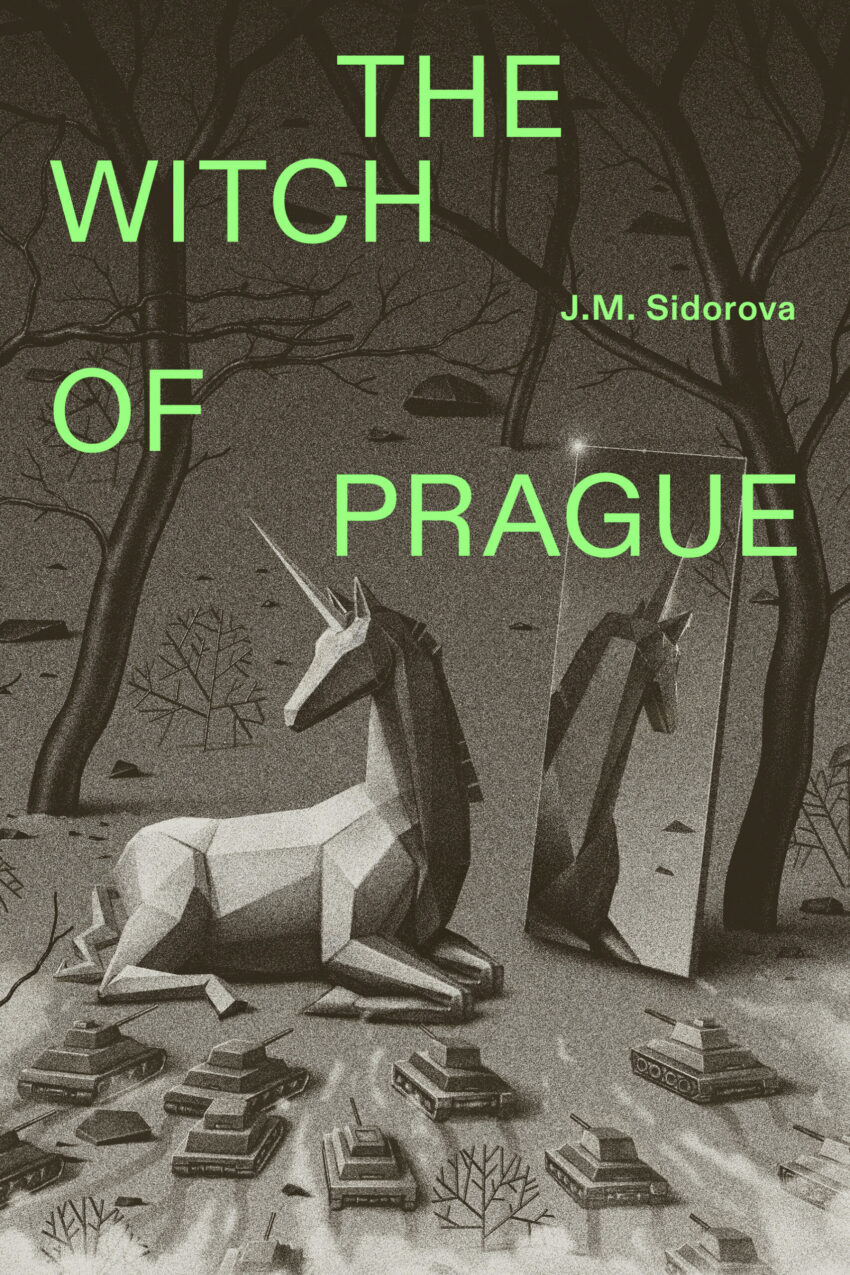
Imagine, like in an old footage, a black and white and grey, smog-hazy, austere world of the Cold War Prague: communist rule in the city of Kafka and Golem, government ministries housed in centuries-old castles with cellars full of history. The year is 1967. The first stirrings of the Czechoslovak people’s movement for democratic reform, the movement that will be known in the history of the twentieth century as Prague Spring, are happening already. Next year in August, this movement will be crushed by the Soviet Union. Columns of tanks will enter city streets, and unarmed civilians will take a stand against the invasion force.
Imagine that the famous, historic Unicorn tapestries (https://en.wikipedia.org/wiki/The_Hunt_of_the_Unicorn) — sewn together and downsized, let’s say — hang in an apartment of a peculiar old lady, somewhere in Prague. In the tapestry’s panels a unicorn is hunted, killed, brought to a castle, and kept on a leash in a pen. The exact story is, of course, a matter of a storyteller’s choice: rearrange the panels and a unicorn dies, do it again — and he escapes. But who is the storyteller? The old lady insists it’s the tapestry itself —and that it has magical properties she’s been wise to avail herself of. Alica, a seventeen year-old who’s escaped her troubled home by becoming the old lady’s apprentice, will have to figure out what the truth is, as all around her events rush toward the historic standoff of August 1968.
Keep reading…
The Witch of Prague had a long journey. It started with a few tales my Mom told me about her early adulthood and about how she’d met my Dad. I took these memories and I wanted to run with them, and I ran and ended up in a story that was not my Mom and Dad’s story. And the farther I got, the more layers this story had enveloped itself in.
If a genre designation can be assigned by how much magical and fantastic stuff is in a book, then this book probably has less magic than one expects in urban fantasy. But what magic there is, it is hard-won. So really, it is a novel of magical realism. It is a novel about a mentorship as damaged as it is fruitful, about magic that, like most things in life, comes without a user manual but with plenty of hearsay; about truth and lies, bodily autonomy, and the fight against authoritarian regimes everywhere.
Published by Homeward Books.
Pre-orders available from Asterism Books
On LitHub’s Most Anticipated Books list for March